
Heavy Snow on Your Roof and Now It’s Leaking? Here’s What You Should Do
Seeing a lot of snow sitting on your roof can be worrying, especially when you start noticing water coming through the ceiling.
Can heavy snow cause a roof leak?
Yes! Heavy snow can cause a roof leak. Heavy snow does not always damage a roof by itself, but a combination of snow accumulation, melting snow, ice dams, poor drainage, and existing roof damage can lead to water getting into your home.
If your roof is already leaking during winter, do not ignore it and wait for all the snow to melt. The water may be getting into areas you cannot see, including the attic, insulation, walls, and roof structure.
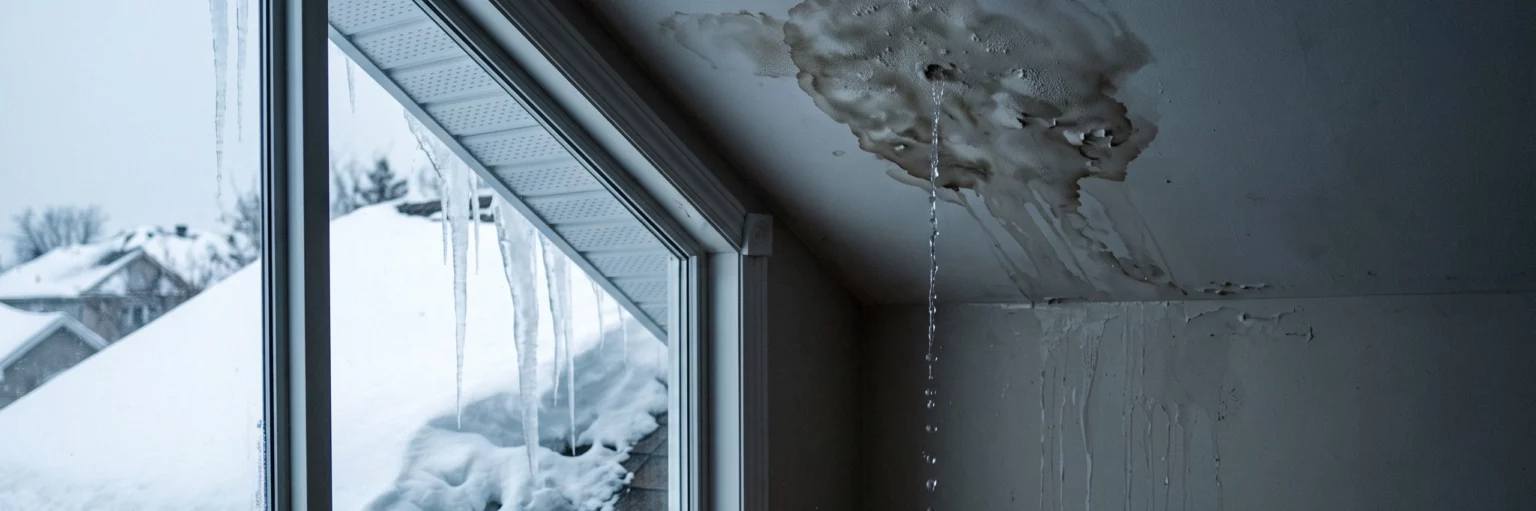
What Should You Do If Your Roof Is Leaking Right Now?
If you have an active leak while there is heavy snow on the roof, take a few simple steps first.
1) Control the Water Inside
Place a bucket or container under the leak and move furniture, electronics, and other belongings away from the area.
If water is near a light fixture, electrical outlet, or other electrical equipment, stay away from it and contact a qualified professional.
2) Do Not Climb Onto the Roof
A snow covered roof can be extremely slippery. Ice may also be hidden underneath the snow.
Trying to remove snow yourself can result in a serious fall and can also damage shingles, flashing, gutters, or other parts of the roof.
3) Have the Roof Inspected
A roofing professional can look for the source of the leak and check areas such as shingles, flashing, valleys, vents, skylights, gutters, and roof edges.
The visible leak inside your home may not be directly below the actual source of the problem.

How Can Snow Cause a Roof Leak?
Snow usually becomes a problem when it starts to melt and refreeze.
During the day, warmer temperatures can cause snow on the roof to melt. The water moves down toward the colder edges of the roof. When temperatures drop again, that water can freeze.
Over time, repeated melting and freezing can create ice buildup. This is where ice dams can become a problem.

What Is an Ice Dam?
An ice dam is a buildup of ice along the lower edge of a roof. It can happen when warmer areas of the roof cause snow to melt while the roof edges remain cold. The melted water reaches the colder edge and freezes.
As the ice grows, it can slow or block normal water drainage. Instead of flowing away from the roof, water may collect behind the ice. In some situations, this water can move underneath shingles or through vulnerable areas of the roofing system.
This can eventually cause a winter roof leak.

Are Roof Icicles a Sign of a Problem?
Large roof icicles are common during Ontario winters, but they should not simply be ignored.
Icicles can form when snow melts and then freezes again along the colder roof edge. They do not automatically mean that your roof has an ice dam, but large or repeated icicle buildup can be a warning sign of melting and refreezing.
If you also notice:
1) Water stains on your ceiling
2) A leaking attic
3) Damp insulation
4) Ice buildup along the roof edge
5) Water dripping around windows or walls
6) Large amounts of snow staying on the roof
It is a good idea to have the roof checked.

Can Heavy Snow Cause Major Roof Damage?
It can, especially when there is already a roofing problem or when snow and ice remain on the roof for an extended period.
Possible problems include:
1) Roof Leaks
Water from melting snow can enter through damaged shingles, flashing, valleys, vents, skylights, or other weak areas.
2) Attic Damage
Water can soak insulation and reach the wood framing inside the attic.
3) Ceiling and Drywall Damage
A roof leak can eventually cause stains, bubbling paint, damaged drywall, and wet ceilings.
4) Gutter Damage
Heavy snow and ice can place additional weight on gutters and roof edges. Ice can also prevent proper drainage.
5) Shingle Damage
Repeated freezing and thawing can put stress on roofing materials, especially when existing damage is already present.
6) Moisture and Mold
If water remains trapped inside the attic or walls, long-term moisture can create conditions where mold may develop. The sooner a winter roof leak is found, the easier it may be to prevent the problem from spreading.

Should You Remove Snow From Your Roof?
Not every snowy roof needs to have all its snow removed. A professional should consider the amount of snow, roof design, roof condition, ice buildup, drainage, and weather conditions before deciding what action is appropriate.
Roof snow removal may be considered when there is excessive snow accumulation, a concern about roof load, blocked drainage, significant ice buildup, or a winter leak. The important thing is to remove snow safely without damaging the roofing system.
Using a shovel, sharp tool, or improper equipment can damage shingles and other roof components.

Why Professional Roof Snow Removal Matters
Removing snow from a roof is different from clearing a driveway or sidewalk. A roof has shingles, flashing, vents, skylights, gutters, and other components that can be damaged if snow is removed incorrectly.
Professional roof snow removal should be done carefully to reduce unnecessary damage while addressing excessive snow accumulation. If ice dams are present, the underlying reason for the buildup should also be considered. In some homes, attic insulation and ventilation can play a role in keeping the roof temperature more consistent.

What About Gutters and Downspouts?
Gutters and downspouts are an important part of your roof drainage system. During winter, snow and ice can block normal water flow. If water cannot drain properly, it may collect around the roof edge.
Before winter, homeowners should make sure gutters and downspouts are reasonably clear and able to move water away from the home. However, if they are frozen or covered with heavy ice, do not climb onto the roof to clear them yourself.

How Can You Reduce the Risk of Ice Dams?
You cannot control the weather, but you can reduce some of the conditions that contribute to ice dams.
1) Check Attic Insulation
Proper insulation can help reduce heat escaping from your living space into the attic.
2) Maintain Good Attic Ventilation
Proper ventilation can help manage heat and moisture in the attic and support a more consistent roof temperature.
3) Keep Gutters Clear
Clean gutters can help melting water move away from the roof when conditions allow.
4) Inspect Your Roof Before Winter
Look for damaged or missing shingles, loose flashing, damaged vents, and other areas that may allow water to enter.
5) Watch for Warning Signs
Large roof icicles, repeated ice buildup, attic moisture, and winter leaks should not be ignored.

When Should You Call a Roofing Professional?
You should consider getting professional help if you notice:
1) A roof leak during or after snowfall
2) Large amounts of snow on the roof
3) Ice dams
4) Large roof icicles
5) Water stains on the ceiling
6) Wet attic insulation
7) Damaged or missing shingles
8) Sagging areas
9) Blocked roof drainage
10) Repeated winter leaks
A small water stain may look harmless, but the source of the water could be somewhere above the visible damage. Finding the source early can help protect your roof and the inside of your home.

Snow Removal in Brampton, Barrie, Innisfil and Oro-Medonte
Ontario winters can bring very different snow conditions from one area to another. Heavy snowfall can create concerns for homeowners when snow remains on the roof and begins to melt and refreeze.
Homeowners searching for snow removal in Brampton may need professional assistance when excessive snow or ice starts creating roof and drainage concerns. The same applies to properties looking for snow removal in Barrie, where winter weather can result in significant snow accumulation.
For homeowners searching for snow removal in Innisfil, roof snow and ice buildup can also become a concern when melting snow cannot drain properly. Properties in the surrounding area may also require snow removal in Oro-Medonte when heavy snowfall creates excessive accumulation or winter roof problems.
Professional assessment can help determine whether snow removal, roof repairs, or another solution is appropriate for the property.

Frequently Asked Questions
1) Can heavy snow make my roof leak?
Heavy snow can contribute to a roof leak, particularly when snow melts and refreezes, creates ice dams, or exposes an existing problem with shingles, flashing, valleys, or roof drainage.
2) How do I know if I have an ice dam?
An ice dam may appear as a thick buildup of ice along the lower edge of your roof. Large or repeated roof icicles can also occur when snow is melting and refreezing. A professional inspection is the best way to determine whether an ice dam is causing a leak.
3) Should I remove snow from my roof?
Not every roof requires snow removal. The decision depends on the amount of snow, roof condition, roof design, ice buildup, and other factors. If you are concerned about excessive accumulation, have it assessed rather than climbing onto the roof yourself.
4) Can ice dams damage shingles?
Ice dams can contribute to water getting underneath roofing materials. Repeated freezing and thawing can also place stress on roofing materials and worsen existing weaknesses.
5) Are roof icicles dangerous?
Large icicles can fall unexpectedly and may injure people or damage property below. They can also indicate that snow is melting and refreezing around the roof edge.
6) How much does roof snow removal cost?
The cost of roof snow removal depends on factors such as the amount of snow, roof size, roof height, accessibility, ice buildup, and the work required. A professional assessment is the best way to determine the cost for a specific property.

Protect Your Roof Before a Small Leak Becomes a Bigger Problem
Heavy snow on a roof does not automatically mean major damage will occur. However, an active leak, ice dam, excessive snow accumulation, and large roof icicles should not be ignored.
If water is already entering your home, the most important step is to find the source and address the problem safely. Whether you need help with roof snow removal, ice dam concerns, winter roof leaks, or roofing repairs, getting the problem checked early can help protect your home from more extensive damage.
For homeowners in Brampton, Barrie, Innisfil, Oro-Medonte, and surrounding Ontario communities, professional help can make winter roof problems safer and easier to manage.