

Ontario winters can be hard on your roof. Heavy snow, freezing temperatures and sudden temperature changes can create ice dams, frozen gutters and blocked downspouts. What starts as a small amount of ice can sometimes turn into a roof leak or water damage.
One way to help manage these winter problems is by installing roof heating cables, also called de-icing cables.
But how do they work? Are they worth installing? And can they really help protect your roof?
Roof heating cables are specially designed electrical cables that are installed in areas where snow and ice commonly build up.
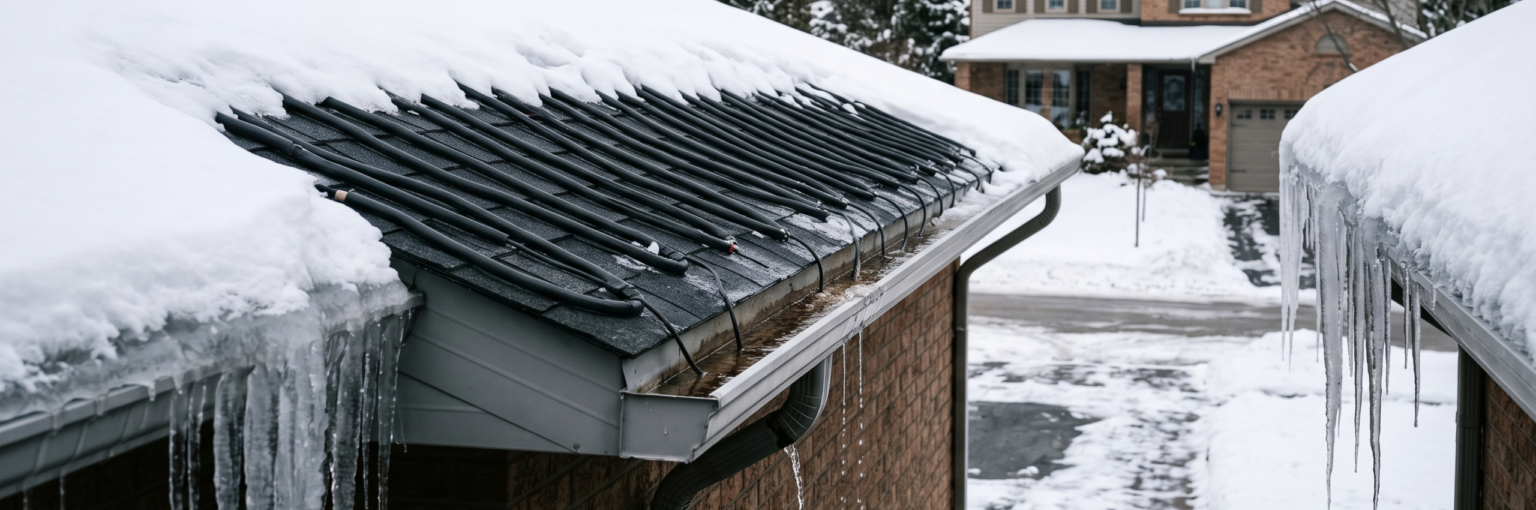
When the cables are turned on, they produce heat that helps melt snow and ice around them. This creates a path for water to move off the roof and through the gutter and downspout. They are not designed to melt all the snow on your roof.
Instead, the goal is to keep important drainage areas open and reduce the chance of water becoming trapped behind ice. This can be especially helpful on homes that regularly experience ice buildup during Ontario winters.
Ice dams can form when snow melts on a warmer part of the roof and then freezes again near the colder roof edge.
Snow falls → snow melts → water runs down → water freezes → ice builds up → more water gets trapped.
As the ice gets larger, it can block the normal path for water. In some situations, water can move underneath roofing materials and enter areas where it should not be, potentially causing leaks and moisture damage.
That is why homeowners often notice problems during or shortly after a period of melting snow.
De-icing cables help create a heated channel through areas where ice normally builds up.
For example, cables may be installed along parts of the:
When operating properly, the cables help melt a narrow path through the snow and ice. This gives melting water somewhere to go. Instead of allowing water to collect behind a solid wall of ice, the heated channel can help direct the water toward the gutter and away from the roof.
They can help reduce the risk of certain winter related leaks, especially those associated with ice dams and blocked drainage. However, heating cables are not a guarantee against every roof leak.
A roof can have many other problems, including damaged shingles, failed flashing, poor drainage, clogged gutters or damaged roofing membranes. There can also be an underlying attic problem.
Poor insulation or air leakage can allow warm air to reach the attic and contribute to uneven snow melting. This is why heating cables should be considered part of a larger winter roof protection plan rather than the only solution.
Not necessarily! A properly designed and maintained roof should be able to handle normal winter conditions. However, some homes have areas where ice regularly builds up because of the roof design, shade, drainage pattern or repeated freeze and thaw conditions.
If you see the same large icicles or ice dams every winter, it is worth having the area inspected. Heating cables may be useful in problem areas where winter ice buildup keeps coming back.
There is no single installation pattern that works for every home. A professional should look at the roof and determine where snow and ice are actually causing drainage problems.
Depending on the property, heating cables may be installed along roof edges, through gutters and into downspouts or around other areas where freezing commonly occurs.
The purpose is simple: Help keep water moving when freezing temperatures would otherwise block the drainage path.
This is an important difference. Heating cables help manage snow and ice around specific areas of the roof and drainage system. Roof snow removal physically removes accumulated snow from the roof.
If a roof has a heavy amount of snow, heating cables are not intended to melt the entire snow load. Professional snow removal may be needed when there is excessive accumulation.
In some cases, homeowners may benefit from both services depending on their roof and winter conditions.
Your roof and gutters work together. When snow melts, the water needs a clear path to leave the roof. If the gutter or downspout is frozen, water may have nowhere to go.
De-icing cables can be used in certain gutter and downspout areas to help reduce freezing and maintain a drainage path. This can be particularly useful on properties that repeatedly experience frozen gutters or downspouts during winter.
Roof heating cables should be installed and used according to the manufacturer’s instructions. The correct cable, installation method and electrical connection are important.
Homeowners should also avoid placing ordinary extension cords or non approved heating products on the roof. A professional can help determine what type of de-icing cables is suitable for the property.
You may want to consider heating cables if you regularly notice:
If the same problem happens every winter, don’t wait until water enters your home. Finding the cause early can help you choose the right solution.
Ontario weather can change quickly. A few days of heavy snow can be followed by warmer temperatures, rain or sunshine and then freezing temperatures again. These changes can create repeated melting and freezing on your roof.
That’s why winter roof preparation is important. Heating cables can provide an additional layer of protection in areas that are prone to ice buildup. When combined with proper attic insulation, ventilation, roof maintenance and safe snow removal, they can help homeowners manage common winter roof problems.
We provide roof winter protection and de-icing cables for homeowners and properties across many communities in Ontario, including:
Toronto, Oakville, Brampton, Mississauga, Oro-Medonte, Innisfil, Orangeville, Bolton, Orillia, Springwater and Vaughan.
If you are dealing with heavy ice buildup, frozen gutters, ice dams or repeated winter roof problems, a professional inspection can help determine whether heating cables or another solution is right for your roof.
Yes, when properly selected and installed, roof heating cables can help melt snow and ice around problem areas and create drainage channels. They are mainly used to help manage ice buildup and ice dams rather than melt all the snow from the roof.
It depends on the weather, the type of system and the manufacturer’s instructions. Some systems operate automatically based on temperature and moisture, while others are controlled manually. A professional can recommend the right setup for your property.
Heating cables can help reduce ice-dam problems by creating channels for melting water to escape. However, they do not fix every cause of ice dams. Proper attic insulation, air sealing and ventilation can also be important in reducing excessive roof heat loss.
Yes. De-icing cables can be installed in certain gutters and downspouts to help prevent ice from blocking the drainage path. The installation should be designed for the specific roof and drainage system.
No. Heating cables are not designed to remove a heavy snow load from the entire roof. They are mainly used to create heated drainage paths in areas where snow and ice commonly cause problems. Heavy snow accumulation may require professional roof snow removal.
Yes. We provide winter roof protection and de-icing solutions in Toronto, Oakville, Brampton, Mississauga, Oro-Medonte, Innisfil, Orangeville, Bolton, Orillia, Springwater and Vaughan. If you are experiencing ice dams, frozen gutters, heavy icicles or winter roof leaks, contact us to discuss your roof and find the right solution.
Ice buildup may look harmless from the ground, but repeated freezing and melting can create drainage problems around your roof. If your home develops the same ice dams, frozen gutters or large icicles every winter, it may be time to look at a better winter protection plan.
Roof heating and de-icing cables can help keep water moving and protect vulnerable areas of your roof during Ontario’s coldest months.
Before installing a system, have your roof inspected so you can understand where the problem is coming from and whether heating cables are the right solution for your property.
Protect your roof from winter ice and snow with professional de-icing cable installation from Real Blue Roofing. We have installed de-icing cables on 100+ homes and businesses across the GTA, Barrie, Oro-Medonte and Innisfil, helping keep roof edges, gutters and drainage areas clear during winter.
📞 Call Real Blue Roofing: 647-740-5225
🌐 Contact us: https://www.realblueroofing.ca/contact-us/
Real Blue Roofing Services Inc
647 740 5225
8890 Heritage Road Brampton
437 826 5225
2255 Dundas St W Mississauga
Real Blue Roofing Services Inc
647 740 5225
8890 Heritage Road Brampton
437 826 5225
2255 Dundas St W Mississauga
Real Blue Roofing Services Inc
647 740 5225
8890 Heritage Road Brampton
437 826 5225
2255 Dundas St W Mississauga
Website and SEO managed by
Blu Up Media Inc.